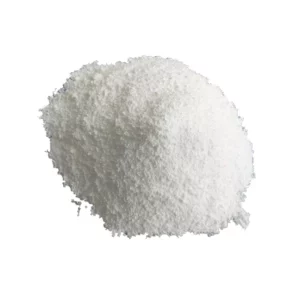
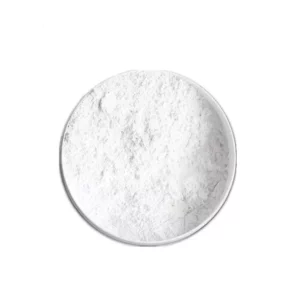
Amitraz Mode of action
Non-systemic, with contact and respiratory action. Expellent action causes ticks to withdraw mouthparts rapidly and fall off the
host animal.
host animal.

|
Product Name
|
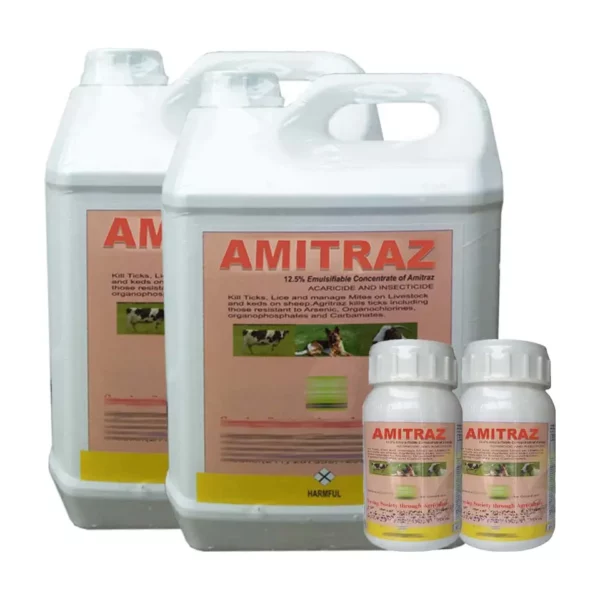
insecticide and pesticides amitraz 20% tactic amitraz 12.5% ec liquide Acaricide
|
|
Function
|
Insecticide
|
|
Specification
|
amitraz 20%
|
|
CAS NO.
|
33089-61-1
|
|
Empirical Formula
|
C19H23N3
|
|
Chemical Name
|
N’-(2,4-dimethylphenyl)-N-[[(2,4-dimethylphenyl)imino]methyl]-N-methylmethanimidamide
|
|
Toxicology
|
Oral Acute oral LD50 for rats 650, mice >1600 mg/kg. Skin and eye Acute percutaneous LD50 for rabbits >200, rats >1600 mg/kg.
Inhalation LC50 (6 h) for rats 65 mg/l air. NOEL In 2 y feeding trials, no adverse effect observed in rats receiving 50-200 ppm diet, or in dogs dosed 0.25 mg/kg daily. Human NOEL >0.125 mg/kg daily. ADI (JMPR) 0.01 mg/kg b.w. [1998]. Toxicity class WHO (a.i.) III; EPA (formulation) III EC classification Xn; R22 |
Also used as an animal ectoparasiticide to control ticks, mites and lice on cattle, dogs, goats, pigs and sheep.

Amitraz Mode of action